

Pet Emergency Preparedness: What to Pack in a 'Go-Bag'

Updated March 2026 | By the PetLovers Team
When disaster strikes, every second counts, and your pets depend on you to act fast. Having a well-prepared go-bag ready can make all the difference between chaos and calm when you need to evacuate with your pets during fires, floods, or other emergencies. By tailoring your kit to your environment and your pet's unique needs, you're protecting their health and comfort no matter what's happening around you. Let's put together a personalized checklist with this complete pet emergency go-bag guide.
The Essential Pet Go-Bag Checklist
A solid pet emergency go-bag list starts with the basics that every pet owner should have ready ahead of time. No matter where you live or what kind of pet you have, this foundation ensures their most important needs are covered when you have to move quickly. A complete kit should include food, water, identification, comfort items, sanitation tools, and health supplies to help your pet handle stressful and uncertain situations.
Food and Water
Pack a two-week supply of non-perishable food suited to your pet's regular diet. Canned options provide extra hydration and store well, while dry food is lighter and simpler to transport.
If you bring canned food, don't forget a manual can opener, and keep everything tightly sealed. Divide portions into waterproof bags or airtight containers so they're safe from spills and moisture.
For water, plan on at least one gallon per pet each day, as most veterinarians and emergency experts recommend. Include collapsible bowls that are strong, washable, and easy to tuck away. Keep extra bottled water handy in case local supplies become unsafe. Rotate all your stored food and water every couple of months so everything stays fresh and dependable, even during longer evacuations or recovery periods.
Identification and Important Documents
Clear identification is essential if you and your pet get separated. Make sure your pet wears a secure collar with an up-to-date ID tag that lists your current phone number and an out-of-area contact. Every pet should also be microchipped and registered, with the contact details reviewed at least once a year.
Keep both physical and digital copies of key records like vaccination certificates, recent photos, proof of ownership, and medical history. Save digital copies on a USB drive and back them up to cloud storage. Label your folders and files clearly so first responders or shelters can identify your pet quickly if needed.
Shelter and Comfort Items
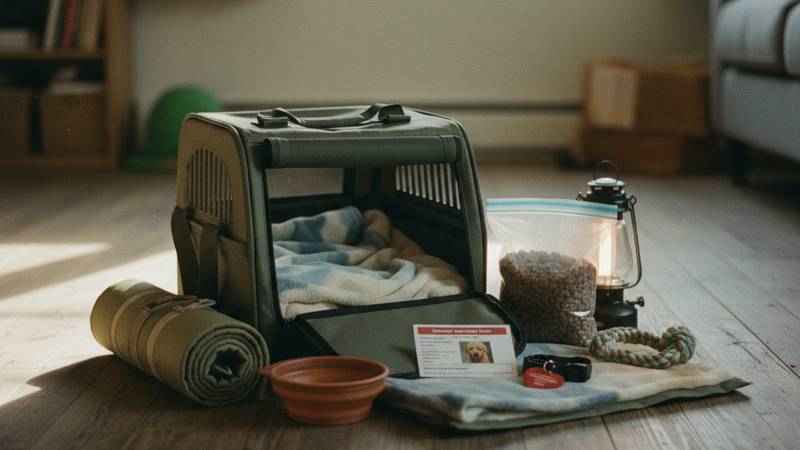
Emergencies can be frightening for animals, so they need a sense of security. A well-ventilated carrier that lets your pet stand and turn comfortably is a must. Label it with your name, your pet's name, and contact information. Line the carrier with a blanket or bedding that carries your pet's familiar scent for extra comfort.
Bring along a few favorite toys and calming treats to soothe your pet during travel or shelter stays. In chaotic environments, these familiar items bring reassurance and help your pet adapt more easily to temporary spaces, easing anxiety and stress.
After evacuation, wash pet carriers, blankets, and bedding with PetLovers Washing Tablets to remove embedded hair, odor, and bacteria from emergency use.
Sanitation and Waste Management
Keeping things sanitary protects both pets and people. Dogs need waste bags and cleaning wipes. Cats will require a portable litter box, litter, and scooping tools. The PetLovers Cat Litter Scoop ($19.99) has a built-in waste container that lets you scoop and dispose one-handed without touching waste, making it ideal for cleanup in temporary shelters or evacuation sites.
Pack a PetLovers Extra Sticky Lint Roller for quick cleanup of pet hair on clothing and carrier surfaces during shelter stays.
Include paper towels, trash bags, and non-toxic disinfectant wipes for quick cleanups. Keep everything together in a leak-proof bag to control mess and odor. These items preserve hygiene in tight or shared spaces. Staying clean helps prevent illness and keeps you and your animals more comfortable until it's safe to return home or move on.
Assembling Your Pet's First-Aid Kit
A dedicated first-aid kit is a critical part of your pet disaster preparedness plan. When veterinary care isn't immediately available, the right tools help treat injuries and control health issues until professional help arrives.
Core Medical Supplies
Every emergency pet supply checklist should include these essential items:
-
Absorbent gauze pads and adhesive tape for dressings
-
Antiseptic wipes and pet-safe disinfectant for cleaning wounds
-
Cotton balls, gloves, small scissors, and tweezers
-
Styptic powder to stop minor bleeding
-
Digital thermometer and saline solution for eyes and wounds
A pre-assembled PetLovers Pet First Aid Kit includes all these essentials in a compact, waterproof pouch designed to fit inside your go-bag. Having everything organized and sterile saves critical time during emergencies.
Keep everything inside a waterproof pouch tucked into your main bag. Add a first-aid instruction card or a vet-approved guide for reference when you're under pressure. Keep things orderly and visible since every moment matters in an emergency.
For trail-specific first aid, see our guide on how to help with a dog's cut paw pad while hiking.
Medications and Prescriptions
Set aside a two-week supply of prescriptions your pet regularly takes. Each container should list your pet's name, dosage, and instructions. Keep a written list of all medications with your veterinarian's contact details so others can care for your pet properly if you can't.
If your pet uses supplements or calming aids, pack those too. Pets with chronic conditions such as epilepsy, diabetes, or heart disease will need extra items like insulin, syringes, or measuring tools. Store all medicines in a labeled, sealed part of the kit to keep them clean and organized.
Customizing the Go-Bag for Your Pet and Environment
No pet go-bag checklist suits every home or pet. Adjusting for your local risks, climate, and your animal's personality makes a big difference when there's an emergency. Customizing the kit helps lower stress and improves safety during evacuation.
Customizations by Pet Type
Every animal has distinct needs. Adapt your pet emergency kit so your companions stay calm, comfortable, and safe:
Dogs: Pack a durable leash, strong harness, muzzle (if needed), chew or puzzle toys. This improves control and eases anxiety during downtime.
Cats: A soft harness and leash, hiding blanket, pheromone spray. This encourages calm and minimizes the chance of escape. Include a portable litter scoop for sanitation in temporary spaces.
Birds & Small Pets: Secure travel cage with cover, species-specific feeders, safe bedding. This keeps small pets contained and calmer while moving.
Test these tools ahead of time so your pets are familiar with carriers, leashes, and other gear. Getting them comfortable early helps reduce panic if you ever need to evacuate quickly.
Adapting for Regional Disasters
Different areas come with different hazards, so tailor your pet disaster preparedness list to the risks most likely in your region. Adapting your kit to local threats strengthens your preparation and saves crucial time when orders to evacuate come through.
For more detailed guidance, compare your go-bag to official checklists such as the CDC Pet Emergency Checklist to ensure your supplies meet national standards.
Storing and Maintaining Your Pet Emergency Kit
How and where you store your pet emergency go-bag decides whether it's truly useful when disaster hits. Easy access, water resistance, and routine upkeep can make all the difference between being ready and being caught off guard.
Where to Keep Your Go-Bag
Keep your bag in a sturdy, waterproof container, preferably near your home's main exit or your car. The kit should be light enough to carry quickly but tough enough to handle rough conditions. If possible, prepare a smaller travel version for the car in case something happens while you're away.
Label the container clearly on all sides as "Pet Emergency Kit." Assign one adult in your home the job of grabbing it during evacuation. Place it next to your carriers and leashes so you can grab everything in seconds without extra searching.
The Bi-Monthly Refresh Schedule
Preparedness fades if you don't keep it up. Follow a bi-monthly refresh checklist to check expiration dates, update important details, and replace worn items. Swap out food, water, and medications every 60 days to keep them safe. Update ID photos and vaccination forms whenever there's a change.
Set a phone alert or mark a calendar reminder for your checks. Regular updates make sure your dog emergency go bag or cat kit stays reliable when you need it most. A few minutes of maintenance now can spare plenty of trouble later on.

Creating and Practicing Your Pet Evacuation Plan
Packing a go-bag is only the beginning. A detailed pet evacuation plan helps you act smoothly when time is tight. Knowing escape routes, transportation details, and communication steps reduces panic for both you and your pets.
Choosing and Preparing the Right Carrier
Pick a strong, well-ventilated carrier that gives your pet enough room to stand and turn. It should close securely and have thick, washable padding. Label each carrier with your pet's name, your name, and your contact information.
Before an emergency, verify your carrier meets airline or shelter requirements. If your pet dislikes the carrier, start slowly with positive reinforcement so they get used to it. The goal is for the carrier to feel safe and familiar, not frightening.
Running Evacuation Drills
Practice is key to staying calm. Run evacuation drills every few months so your pet learns to enter their carrier easily. Try loading your bag and simulating an exit to spot any delays or missing supplies.
Use treats or gentle praise for cooperation. Repeating this process regularly helps both you and your pet know what to do, turning fear into confident action when it really matters. Well-practiced routines make evacuation with pets faster and much less stressful.
Planning for a Multi-Pet Household
If you have several pets, organization is essential. Assign each family member to care for a specific animal during an emergency so no one's overlooked. Prepare individual go-bags, each clearly labeled with the pet's name and type to avoid confusion.
Store carriers, leashes, and harnesses in one place for quick access. Practice exit routines that let everyone move efficiently from home to car or transport area. With planning and teamwork, even large families can follow smooth, reliable disaster plans for pets without leaving anyone behind.
PetLovers Take on Preparedness
Real preparedness means protecting every member of your household, including your furry ones. A carefully stocked pet go-bag filled with food, documentation, and comforting items ensures safety and eases strain when life takes an unexpected turn. Customizing it for your region and pet's type keeps it practical and efficient when seconds matter. Regular upkeep and practice turn readiness into habit. By setting up and maintaining your pet emergency supplies now, you protect both your peace of mind and your pet's safety when it truly counts.
If you travel with your dog regularly, our 10 essentials every dog owner needs in their car covers the everyday version of emergency preparedness.
FAQs about Pet Emergency Go-Bag
What should I include in a pet emergency go bag?
Pack a two-week supply of food and water, prescription medication, first aid essentials, and key documents like vaccination records and identification tags.
How much food and water should I pack for my pet?
Include at least a two-week supply of food and a gallon of water per pet per day to maintain proper hydration and nutrition during long emergencies.
How do I identify my pet if we get separated during evacuation?
Keep IDs up to date with a registered microchip and current tags showing your phone number and an emergency contact.
What first-aid supplies are essential for a pet emergency kit?
You'll need antiseptic wipes, gauze pads, adhesive tape, tweezers, gloves, a thermometer, and any regular medications your pet takes. A PetLovers Pet First Aid Kit has everything pre-assembled.
How often should I update and rotate items in my pet emergency kit?
Check and refresh the kit every two months so food, water, and medications stay safe to use.
Where should I store my pet emergency go bag?
Keep it in an easy-to-reach spot, near your main exit or in your vehicle, so it's ready to grab when you need to act fast.
What carriers are best for emergency evacuation?
Choose appropriately sized, ventilated carriers labeled with your contact details and your pet's information for quick identification.
Should I have different emergency kits for different pets?
Yes. Each pet should have its own kit tailored to its species, size, diet, and health needs.
What medications and medical records should I include?
Include all your pet's prescription medications along with copies of vaccination records, medical history, and proof of ownership.
How do I practice emergency evacuation drills with my pet?
Run simulated drills every so often, rewarding calm behavior so your pet stays cooperative when it's time for the real thing.