

Understanding Velcro Cats and Their Behavior

Updated March 2026 | By the PetLovers Team
If your feline shadow trails you from couch to kitchen, you're probably seeing more than just clinginess. That kind of close companionship usually shows a deep level of trust and emotional awareness rather than simple dependency. By exploring the subtle reasons behind this attachment, you can uncover how your cat's need for closeness ties into their mental health and daily environment. Let's take a closer look at the tenderness and psychology behind the velcro cat.
What Is a Velcro Cat?

Rattan Cat Desk Bed
Give your velcro cat a perch right next to you — without sharing your keyboard.
A velcro cat is one that shows unusually strong attachment and clingy behavior, often seeking constant closeness and reassurance from their human companion. Unlike cats that enjoy brief interactions, a velcro cat will follow you from room to room and insist on staying physically close, perched on your lap, snuggled near your feet, or curled tightly against your side.
Veterinary experts describe a velcro cat as one that wants to be part of every moment of your routine, following you everywhere with watchful eyes. This behavior reveals not just dependency but also a deep emotional connection and a sign of trust. For many cat owners, this affection feels like a steady, loving presence, prompting the natural question: how can you tell if your cat really fits this description?
Key Signs of a Velcro Cat
It's easy to spot a velcro cat once you notice the patterns. The most obvious sign is constant shadowing: you move, and your cat instantly trails behind. They might settle beside you on the couch, perch next to your laptop, or nudge open the bathroom door as if personal space is optional.
Physical closeness is their favorite kind of communication. Many velcro cats sleep on or near their humans, purring often to show they feel safe. When you leave the room, they may meow, chirp, or call out to reestablish contact. Other trademarks include kneading your lap, rubbing against your legs, or showing mild agitation when you're preparing to leave home.
While these gestures are endearing, they can also hint at underlying emotions, a kind of attachment that sometimes drifts toward anxiety. Understanding that emotional nuance takes us into the psychology of clingy feline behavior.
The Psychology Behind Clingy Cat Behavior
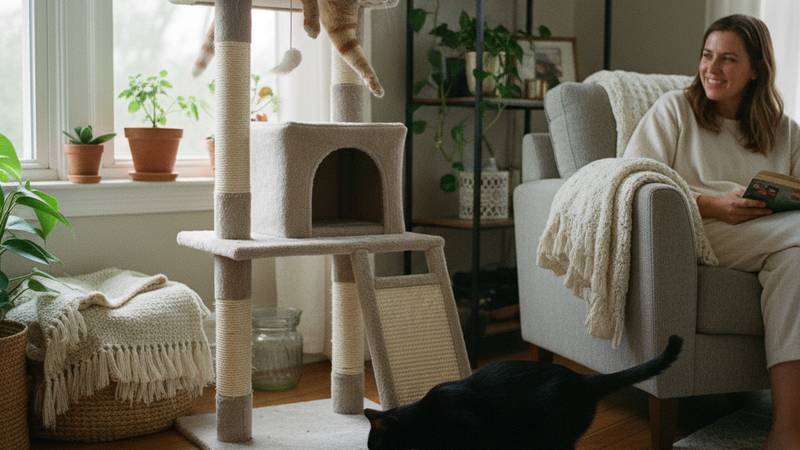
Clingy cat behavior means more than just affection. It reflects a cat's emotional intelligence, the ability to form secure bonds and seek comfort in trusted humans. For many cats, closeness is a coping tool that offers reassurance and consistency in a world that can sometimes feel uncertain.
Research shows velcro cats tend to have well-developed attachment behaviors, seeing their human as a reliable source of comfort and stability. Many of these cats share similar early experiences: being weaned too soon, living as strays, or moving between multiple homes.
Since around 27% of cats are adopted as strays, quite a few learn to rely strongly on people once they find a steady environment. Conditions in the home can deepen this bond too.
Limited stimulation, little company, or boredom can lead cats to focus almost entirely on their humans as their main source of engagement. For more about this connection, see data about stray cat adoption rates and how early life experiences shape feline attachment.
From Affection to Anxiety
That fine line between affection and anxiety can sneak up on you. When your cat suddenly becomes needier, you might ask, "Why is my cat so clingy all of a sudden?" A sudden increase in attachment often points to something changing in their daily life.
Moving homes, shifting schedules, or new family members can unsettle even confident cats, so they cling closer for reassurance. When love starts to turn into distress, separation anxiety can develop.
Cats going through it might cry when left alone, hide, or scratch and chew things they normally wouldn't. Early recognition makes a big difference.
Gradual desensitization, more playtime, and consistent routines can help your cat feel at ease. This connection between emotion and environment also explains why some breeds or personalities show stronger velcro traits than others.
Affectionate Cat Breeds Prone to Clinginess
Certain breeds are naturally more people-oriented than others. Ragdolls, often called "puppy cats," are famous for going limp when held and following their owners like loyal dogs. Siamese cats, known for their intelligence and chatter, form intense bonds and crave constant contact.
Burmese and Sphynx cats share that attachment too, each driven by a need for warmth and social connection. Still, any cat, mixed or purebred, can show velcro behavior. Personality, early life, and past experiences often matter more than genetics.
A shelter rescue might bond deeply because of earlier instability or trauma. Recognizing these influences can help you tell the difference between loving affection and stress-based dependency, which is key to a balanced relationship.
Is Your Velcro Cat's Attachment Unhealthy?
Most velcro cats are simply affectionate, but it's worth watching for signs that the bond has become unhealthy. A balanced cat enjoys closeness yet still plays, naps, or explores alone without distress. An anxious cat, though, can't handle brief separations and shows physical or behavioral signs of stress.
Red flags include constant meowing when you leave, scratching at doors, over-grooming, skipping meals, or eliminating outside the litter box. Some cats might resort to gentle biting or pawing just to demand attention.
Such habits may come from anxiety or medical issues, so a visit to the vet or a behaviorist can help rule out health concerns and create a comfort strategy that encourages confidence.
By watching patterns and identifying triggers, you can support both independence and connection. The goal isn't to reduce affection but to help your cat feel safe and self-assured, even when you're not around.
How to Help a Velcro Cat Be More Independent
Encouraging independence in a velcro cat is about building trust and stimulation, not withholding affection. Start by enriching their environment with things like puzzle feeders, climbing spaces, or window perches.
Give your velcro cat a dedicated comfort spot with the PetLovers Cat Desk Bed. Available in Rattan ($49.99) and White Plush ($39.99), these beds clamp to your desk or shelf so your cat can stay close without demanding your lap.
Watching birds, sunlight, and movement outside can keep their mind busy and reduce dependence on you. Routine adds comfort. Create consistent times for feeding, play, and rest so your cat feels grounded in a predictable rhythm.
Try not to respond immediately to every attention-seeking call; instead, reward moments of calm with soft praise or treats. This helps your cat link relaxed, confident behavior with good outcomes.
Cats really do thrive on structure and enrichment. The right balance between interaction and independence strengthens emotional stability and reduces separation stress. From there, you can help your cat build confidence through focused self-directed play.
Encouraging Independent Play
Encouraging solo play reminds velcro cats that they can find joy without constant human involvement. Toys that spark movement, like feather wands, ping pong balls, or motion-triggered lasers, feed their hunting instincts and keep them busy while you work.
Automated treat dispensers or rotating toys add even more excitement for times you're away. For mental stimulation, try scent-based or foraging games. Hide treats around the house or use puzzle mats to tap into their curiosity.
These challenges mimic the fun of outdoor exploring and reward independence. Bit by bit, this kind of experience shifts dependency into healthy companionship rooted in trust rather than need.
Our Take on Velcro Cats
To understand a velcro cat is to appreciate the quiet depth behind every gentle paw tap and persistent meow. These cats aren't simply needy. They're showing trust and emotional awareness shaped by who they are and what they've been through.
With balance, this closeness becomes one of the most rewarding parts of living with a cat. By offering consistent enrichment, calm structure, and space for independence, you help your feline feel confident both beside you and on their own. That harmony turns clinginess into comfort, proving love thrives best when it's built on trust and respect.
Velcro cats mean more hair on your clothes and furniture. Keep a PetLovers Extra Sticky Lint Roller nearby for quick cleanup, or use the EzRoll Mega Reusable ($13.99) for daily maintenance without the waste.
If your velcro cat loves your home office, see our guides on why cats walk on keyboards and how to cat-proof your home office for practical workspace solutions.
FAQs about Velcro Cats
What is a Velcro cat?
A Velcro cat is one that shows strong attachment to its owner, often following them everywhere and seeking constant physical contact. A cat desk bed gives them a dedicated spot near you.
Why is my cat so clingy all of a sudden?
Sudden clinginess often signals a change in their environment: new people, schedule shifts, or stress. It can also indicate a health issue. If the behavior is new and persistent, a vet visit is a good idea.
What is the most Velcro cat breed?
The Sphynx is often called the clingiest breed, but others like the Ragdoll, Burmese, and Scottish Fold are also famous for their affectionate personality.
How to tell if your cat is a Velcro cat?
Watch for behaviors like following you from room to room, insisting on staying near or on you, and vocalizing or showing attention-seeking habits whenever you're close.
How do I give a velcro cat their own space?
Set up a comfortable spot near where you spend the most time. A cat desk bed or elevated perch within arm's reach satisfies their need for closeness while giving you space. Add a blanket with your scent for extra comfort.
Can velcro cat behavior become a problem?
It can if it crosses into separation anxiety. Signs include destructive behavior, over-grooming, or refusing to eat when you're away. If you notice these, consult your vet or a feline behaviorist.
Related reading: Cat litter odor control: how to keep the box fresh · PetLovers Cat Litter Scoop with built-in waste container
Velcro Cats Belong At Your Desk
A handmade rattan bed clamps to your desk so they're always close, never in the way.