

How to Remove Dog Hair From Clothes (Laundry Guide)

Few things ruin laundry day faster than pulling "clean" clothes from the dryer only to find them still covered in clingy fur. This guide covers both dog and cat hair (plus rabbit fur and stubborn lint), because the fix is the same: stop the buildup before water ever touches your fabrics. Below is the exact routine our team uses to get pet hair out of clothes for good, from the pre-wash roll to the final dryer pass.
The Quick Answer
To remove dog hair from clothes, work in three moves: (1) lint-roll the garment or run it through a 10-minute no-heat dryer cycle to lift loose fur into the lint trap, (2) wash on cool with half a cup of white vinegar in the rinse and never overload the drum, and (3) dry with wool balls and clean the lint trap halfway through. The golden rule: never put hairy clothes straight into the washer, because wet hair glues itself into the fibers.
Why Pet Hair Is So Hard to Remove
Pet hair clings to fabric for two reasons: static electricity and physical structure. Dryer tumbling and daily wear build up a static charge, and that charge pulls fur onto clothing and holds it there. On top of that, individual hairs have a barbed, tapered shape that hooks into woven fibers, so they resist a simple shake-out.
Dog and cat hair behave a little differently. Dog hair is often coarser and sheds in visible clumps, so it sits closer to the surface and lifts off more easily once you break the static bond. Cat hair is finer and shorter, which lets it entwine deep into threads, especially on wool and knitwear. That is why cat hair feels "woven in" and needs faster action. We cover the cat-specific tricks in their own section below.
The takeaway: the goal is never to wash harder. It is to break the static and lift loose hair off before the wash, then keep the machine from redepositing it. Here is the system.
The Roll, Wash, Roll System (At a Glance)
Every method below fits into one simple rhythm: Roll → Wash → Roll. Remove loose fur first, wash smart, then finish clean. This table shows how the main tools stack up so you can pick what fits your laundry day.
| Method | When to use it | Effort | Best for |
|---|---|---|---|
| Lint roller (pre-roll) | Before every wash, and quick touch-ups | Low | All fabrics, fastest result |
| No-heat dryer cycle | Before washing a full load | Low | Removing up to 80% of surface hair |
| White vinegar rinse | During the wash | Low | Cutting static and releasing stuck hair |
| Wool dryer balls | In the final dry | Low | Static-prone synthetics and fleece |
| Washing machine cleaner tablet | Monthly, empty machine | Low | Clearing hair trapped inside the drum |
Step 1: The "Pre-Roll" (The Most Important Step)

Extra Sticky Lint Roller
The fastest tool for pet hair on clothes. Three swipes and you're out the door.
When you are figuring out how to remove dog or pet hair from your clothes, the best place to start is before washing. Throwing hairy clothes straight into the washer forces fur deeper into the fibers, creates that dreaded "wet dog" smell, and can clog your drains. Once hair gets wet, it practically glues itself to the fabric, and even a strong spin cycle will not save you.
Your first line of defense is removing as much loose hair as you can. A big sticky lint roller works wonders for this. Unlike scraping tools or rubber brushes that can rough up fabrics, a high-quality tape roller grabs fur gently and cleanly. It is safe on wool, cotton, and synthetic blends, quick to use, and available in reusable options that cut down on waste. Many eco-friendly households prefer silicone-based or washable rollers, since they perform just as well as single-use sheets but are better for the environment.
For best results, lay out or hang up your clothes before rolling so the fabric stays taut. That way the roller reaches hair deep in the weave. Do not skip collars, cuffs, and underarms, since these areas trap hair through friction. Pre-rolling sets up every later step for success and lets your washer and dryer work more efficiently.
Step 2: The "Dryer First" Technique
Here is a pro move most people miss: run your furry clothes through a 10-minute "No Heat" or "Air Fluff" dryer cycle before washing. The dry tumbling loosens stubborn hair while the airflow moves those bits into the lint trap, not deeper into your clothes.
This small step can remove up to 80% of surface hair before washing even begins. The science is simple: movement and dry air reduce static, which breaks the bond between fabric and hair. The dryer's rotation then shakes other debris loose. When the short cycle ends, check the lint trap (it will probably be full) and clean it right away. Clean airflow stops hair from swirling back into the drum and reattaching later.
If you are cleaning large items like blankets or dog bed covers, dry them separately so they do not share fur with your clothes. You can also add dryer balls or microfiber cloths to the load, which attract stray hairs while tumbling.
Step 3: Washing Machine Settings and Additives
The wash is where deep cleaning actually happens. To remove dog hair from clothes in the washer, focus on three things: load size, additives, and temperature.
Do not stuff the washer. Clothes need room to move so the water can lift fur away. When the drum is packed tight, it just traps more hair inside folds. Filling it about two-thirds full usually gives the right balance of movement and water flow.
Next, pour in half a cup of white vinegar during your rinse cycle. Vinegar acts like a natural, chemical-free fabric softener that helps relax threads and release stuck hairs. It also breaks down leftover detergent residue that encourages static cling. The smell vanishes completely once clothes dry. If you want extra lifting power, an enzymatic or baking-soda-based laundry detergent helps break down the oils that make fur stick.
As for temperature, stick with cool or warm cycles. Hot water can actually "bake" hair into synthetics like polyester and make it worse. Cool water protects color and elasticity while keeping fibers soft, so hair slides off more easily. If your washer offers it, an extra rinse helps flush away more fur, especially from cling-prone fabrics.
Step 4: The Dryer (Again)
The second dryer run is all about controlling static and finishing the job. After washing, toss your clothes in the dryer again with wool balls or anti-static dryer sheets. The gentle friction stops static buildup, which is the number-one reason pet hair clings so badly. As clothes tumble, that constant movement lifts remaining strands and brings back softness.
Halfway through drying, pause the cycle and clean out the lint trap. Skipping this lets loose hair recirculate and undo your earlier steps. Cleaning midway doubles the lint you capture and boosts airflow for faster drying. You can also toss in a slightly damp microfiber cloth, which acts like a magnet for lingering hair or dust. Once dry, take clothes out right away so static does not make fur reattach. Smooth fabrics such as satin or polyester might still need a quick once-over with a lint roller.
How to Get Cat Hair Out of Clothes
Cat hair needs the same Roll, Wash, Roll system, but with two adjustments. Because cat hair is finer and entwines deeper into threads, speed matters more: the longer it sits, the harder it is to remove. And because it is so fine, a high spin speed does most of the work in the wash.
Start by removing as much loose fur as you can with a pet hair remover or lint roller, paying attention to woolen and knitted items where cat hair binds tightest. A dry sponge is a handy backup: the roughness grabs fur, and you just pull the collected hair off by hand as you go. A dampened rubber glove works too, and it lets you get precise around collars and underarms.
When you wash, use a low heat setting and a high spin speed (around 1400 rpm if your machine offers it). The fast spin flings fine cat hair off the fabric instead of matting it in. Run your pre-roll or a no-heat dryer tumble first, then let the washer clear away the rest.
How to Get Cat Hair Off Black Clothes
Cat hair is always more obvious on black and dark clothing, so act quickly. The longer fine hair sits on dark fabric, the more it works its way in and breaks when you try to remove it, which is what leaves those tiny stubborn flecks. Remove as much visible hair as you can with a lint roller first, then wash on a cool, high-spin cycle. Turning dark garments inside out before washing also keeps stray hair off the visible surface.
Handling Tricky Fabrics
Different fabrics behave differently with pet hair. Fleece, flannel, and synthetics are prime hair magnets because their texture holds static easily. Use shorter drying times with wool balls, since over-drying only makes static worse, and finish with a lint roller. A vinegar rinse cuts the surface charge too.
Velcro closures grab and hold fur like nothing else. Before washing, fasten every strap and clean the hooks with a fine comb, a toothbrush, or the edge of a credit card. For black leggings, athletic wear, and yoga pants, every strand stands out because of the tight synthetic weave, so keep a travel lint roller handy for post-gym touch-ups and turn them inside out to wash. If you want to cut the problem off at the source, our guide to pet-hair-resistant fabric covers which materials shed fur the easiest.
Maintenance: Cleaning Your Machine
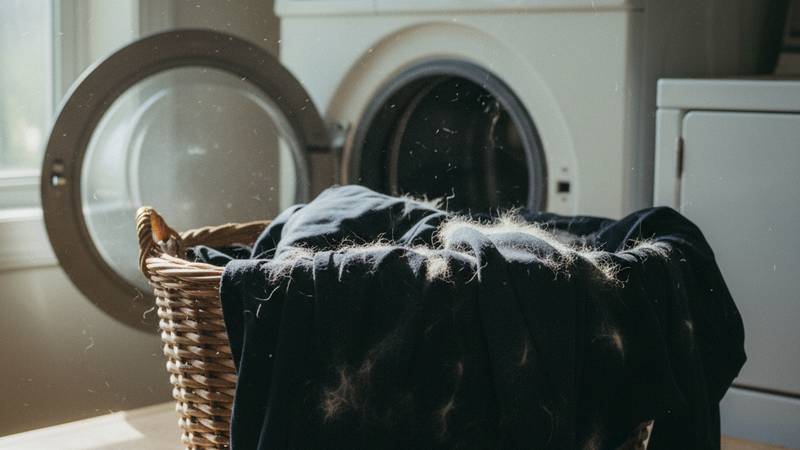
Even if you do everything right, lingering hair finds its way back if your washer and dryer are not clean. Both collect hair in corners you cannot see, which then transfers to fresh loads. For your washer, run an empty hot-water cycle with a cup of white vinegar, or use washing machine cleaner tablets made for pet owners, which dissolve trapped hair, residue, and odor in a single empty cycle. Afterward, wipe down the drum, door seal, and detergent tray with a damp microfiber cloth, and check the rubber gasket, where pet hair collects most.
For your dryer, rinse the lint screen every few uses and vacuum around its housing and back vent occasionally to keep airflow strong. Built-up hair not only slows drying but can become a fire hazard if ignored. A deep clean about four times a year keeps everything running efficiently and stops lint and fur from recycling back into freshly washed laundry.
Prevention and Long-Term Strategies
Brush your pet once or twice a week with a de-shedding tool suited to their coat, whether it is fine, long, or double-layered. This reduces the loose undercoat that would otherwise end up on your clothes. Groomers point out that regular baths and comb-outs minimize heavy seasonal shedding, especially in breeds like huskies and Labradors.
Your clothing choices matter too. Go for smooth, tightly woven fabrics like denim or twill, which naturally resist fur, and avoid fuzz or fleece on days you will be snuggling pets. Some owners keep a set of low-static "pet cuddle clothes" and wash them separately so fur does not spread through the wardrobe. Wash pet bedding, throws, and blankets once a week, shaking them out and lint-rolling first to stop major buildup.
If you prefer sustainable choices, switch to eco-friendly tools such as washable lint brushes, reusable rollers, or silicone grooming gloves. These align with the EPA's sustainable materials guidelines and cut disposable waste.
The Bottom Line on Fur-Free Laundry
Keeping clothes pet-hair-free is not about one miracle device. It is about consistency: pre-roll to lift loose fur, add a short no-heat tumble, optimize your wash for hair release, then finish clean and keep your machine maintained. Follow the Roll, Wash, Roll rhythm and a fur-free wardrobe becomes second nature. For that last finishing touch, keep a few Extra Sticky Lint Rollers nearby.
Related: If pet hair is also embedded in your carpet fibers, see our guides on how to get dog hair out of carpet and how to remove pet hair from your couch.
FAQs: Getting Pet Hair Out of Clothes
How do you get dog hair off your clothes?
Put fur-covered clothes in the dryer with one or two damp microfiber cloths on a low-heat cycle for a few minutes. The cloths attract loose fur, making it easy to follow up with a lint roller or brush after. Rolling before you wash is the single most effective step.
Why do my clothes still have dog hair after washing?
Dog hair clings tightly to fabric, especially when static builds up. Use vinegar or softener in the rinse, clean your lint trap regularly, and clean the inside of the washing machine itself, where hair collects and transfers to the next load.
What can I put in the washing machine to collect pet hair?
Half a cup of white vinegar in the rinse loosens hair and cuts static. Lint-catching balls or pet hair remover discs help pull hair away during the cycle. For hair already trapped inside the drum, run a washing machine cleaner tablet through an empty hot cycle once a month.
How is removing cat hair different from dog hair?
Cat hair is finer and entwines deeper into threads, so remove it quickly and wash on a high spin speed (around 1400 rpm) to fling it off the fabric. Dog hair is coarser and sits closer to the surface, so breaking static with a pre-roll and vinegar usually does the job.
Does a high spin speed help remove pet hair?
Yes. A faster spin throws fine hair off wet fabric instead of letting it mat back in, which is why it works especially well for cat hair. Pair it with a cool wash and an extra rinse for the best result.
The Lint Roller Every Pet Owner Needs
Built for dog hair, cat fur, and the surfaces in between.