

How to Get Dog Hair Out of Carpet

Every pet owner knows that carpets collect dog hair like a magnet, no matter how often you vacuum. The problem isn’t just shedding, it’s how the hairs twist deep into the carpet fibers and stay there because of static electricity. Regular suction can’t break that hold, especially on textured or high-traffic areas like stairs. Here’s how to finally beat the buildup and learn how to get dog hair out of carpet, even in tricky spaces.
Why the Vacuum Isn’t Enough

Large Floor Lint Roller 4-Pack
Covers carpet, rugs, and hard floors fast, and comes with 4 refill rolls so you are not stopping to change sheets.
Even a top-tier vacuum can’t remove all the dog hair buried deep in carpet fibers. Standard suction only lifts surface fur, while the rest gets tangled around the weave, especially in spots where paws push it down farther.
Synthetic carpets such as nylon and polyester make things worse since they cling to hair with strong static electricity, making it near impossible for suction alone to lift it free.
That static charge acts like a magnet, bonding hair to fibers and letting loose strands settle into dense loops. When you add in dander and natural oils from your pet, the mix forms clumps that vacuums tend to skate right over. This blend of static, oils, and fiber structure basically “locks” the fur in place.
If you really want to master how to get dog hair out of carpet, you’ll need tools and methods that fight static, lift embedded hair, and reach places your vacuum can’t—like those stair corners where hair piles up fast.
Let’s look at a favorite tool that professional cleaners swear by.
Method 1: Use a Carpet Scraper or Rake

A carpet rake, sometimes called a carpet scraper, is the go-to when your vacuum keeps missing stubborn fur. This small handheld tool uses either metal teeth or a flexible plastic edge to pull hair from deep inside the carpet pile. Even after you vacuum thoroughly, these rakes can pull out surprising amounts of tightly packed hair.
To get the most out of it, use short, quick strokes over a two-foot area at a time. Move in different directions, north to south, then east to west, so you’re lifting hair from every angle. A metal rake works best on high-pile or synthetic carpets, while a softer plastic model is kinder to wool and looped textures.
Many dog owners say it’s oddly satisfying to see solid lines of fur come up cleanly, almost like brushing dirt off suede. You’ll see your carpet’s texture revive right before your eyes.
Besides removing hair, a rake helps fluff flattened fibers, which restores texture and even color. Over time, this can stop the surface from matting and make your carpet feel almost new again.
Once you’ve lifted the hair, the next step focuses on preventing static from bringing it right back.
Method 2: Try the Fabric Softener Mist
This easy-at-home trick loosens hair while making your carpet smell fresh. Mix one part liquid fabric softener with three parts water in a spray bottle. Lightly mist the carpet (don’t soak it) and wait about ten minutes for it to dry before vacuuming.
Here’s how it works: fabric softener neutralizes static and adds a bit of slickness to the carpet fibers. That light coat breaks the cling between charged hairs and materials like nylon or polyester. Once the static is gone, the hair lifts off much more easily when vacuumed.
You’ll spot the results right away, hair glides off instead of sticking or tangling deeper. It’s a great trick in the dry winter months when static builds constantly. Try using it in living rooms or hallways where your dog loves to roll around.
Once static is under control, shift to a low-tech mechanical tool that uses friction to gather hair in one sweep.
Method 3: Use a Rubber Squeegee or Broom
Rubber tools grip pet hair through natural static friction, tugging it free as you drag across the carpet. You can use a small squeegee for stairs and a rubber broom for wide areas. Both work the same way: their gentle drag builds a slight opposite charge that pulls hair toward the rubber.
Use firm, short strokes as you go. The hair will collect into visible clumps that you can pick up or vacuum afterward. Rubber brooms are perfect for low-pile or loop carpets, giving friction power without burying into the fibers.
They’re also great for big rugs and hallways where vacuums often miss along the edges. These tools are a favorite among groomers and pet owners because they’re durable, washable, and don’t use power. It’s a quick, eco-friendly fix for day-to-day shedding cleanup.
For best results overall, match your cleaning method to the type of carpet you have.
Method 4: Use Baking Soda for Odor and Loosening
Baking soda tackles two jobs at once: it kills odors and reduces static. Sprinkle a thin layer across carpets, especially on high-shed areas like pet beds, entryways, or stairs. Wait 10–15 minutes to let it absorb oils and loosen static bonds.
As you vacuum, those tiny granules help scrub away hair and dander that cling to fibers. It’s also great at neutralizing that lingering “wet dog” smell while being safe on carpet color.
Used weekly, baking soda keeps your carpet fresher and can actually help your vacuum work better by reducing static. When paired with regular brushing or grooming, it builds a solid routine to stay ahead of both hair and odor.
How Carpet Fiber Type Affects Hair Removal
Each carpet material behaves differently with static, hair, and oil. Adjusting your cleaning approach to your carpet’s fiber type makes a big difference when figuring out how to remove dog hair from carpet effectively.
Wool Carpets
Wool naturally resists static, which means hair doesn’t cling too deeply into the pile. The loops, however, can snag if handled roughly. A gentle brush or flexible plastic rake works nicely here, loosening hair without fraying the weave. Since wool absorbs moisture, use only a light mist of softener or stick with dry friction tools.
For example, older wool rugs often come back to life with a careful raking that lifts hair while reviving their texture.
Nylon Carpets
Nylon is highly static-prone, attracting hair and dander easily. The best approach combines anti-static treatments like the fabric softener mist before vacuuming, then follows with a rake or rubber broom to remove whatever’s left.
A sprinkle of baking soda now and then helps neutralize static and keep hair from clinging again. Nylon carpets are common in family homes because they’re tough, but that same durability makes static control extra important when pets live there too.
Polypropylene Carpets
Polypropylene resists moisture and naturally repels oils, keeping odors and hair to a minimum. Usually, a quick pass with a rubber broom or metal rake clears it clean. The smoother fibers don’t hold static easily, which makes this material one of the simplest to maintain.
When your tool matches the carpet type, cleaning becomes smoother and way more effective.
Now let’s focus on one of the toughest spots to tackle: the stairs.
How to Get Dog Hair Out of Carpet on Stairs
Carpeted stairs can be frustrating because of their narrow corners and vertical faces, which make it tough for big vacuum attachments to fit. Dog hair gathers along stair lips, edges, and bases where suction can’t quite reach. Leaving it there often drags allergens and dirt into other rooms.
Always start at the top stair and work down so loose fur doesn’t spread back upward. Use a handheld hair remover, stiff brush, or small carpet rake to pull hair into neat lines, then pick it up or vacuum it away.
For tight corners, rubber gloves are a lifesaver. Rub your palm over the carpet—friction grabs the hair easily. On vertical risers, swipe downward so everything falls onto the step below and gets picked up in your next pass.
Finish with a slow vacuum using a crevice or upholstery nozzle for fine dust. Once you’re done, a quick deodorizing step gives your stairs a clean, fresh scent.
Preventing Dog Hair Buildup in Carpets
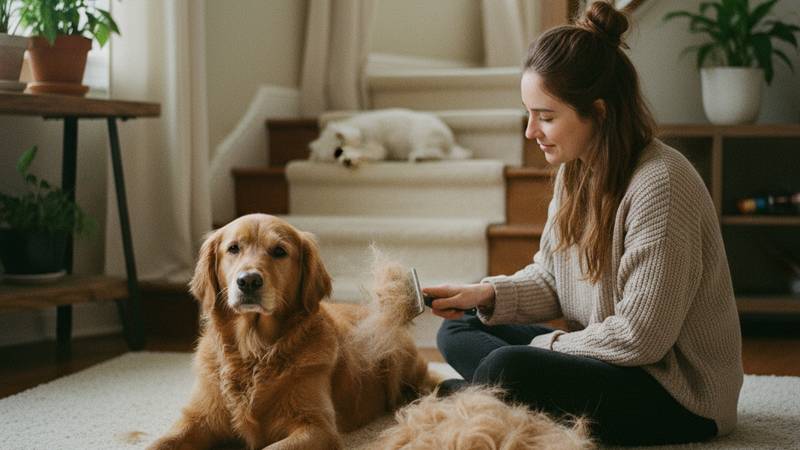
Prevention goes a long way when keeping carpets fur-free. Groom your pet often! Dogs that shed a lot should be brushed several times per week. Regular brushing removes loose fur before it hits the floor.
Use washable mats or blankets where your pet rests, and clean those weekly. For heavy shedders, vacuum every other day; moderate shedders can manage with two to three times a week.
Spray synthetic carpets with an anti-static product every few weeks to stop re-cling. Adding protective runners beneath common pet hangout zones also helps prevent fibers from holding onto hair and smells.
If buildup won’t budge, bring in professionals occasionally to reset your carpet’s clean baseline.
Professional and Deep Cleaning Options
Even with regular care, pet dander can hide deep in carpets for months. A professional steam or hot-water extraction can remove nearly all pet allergens and deeply embedded residue. These methods clean far beyond what normal vacuuming or home tools can reach, reviving both the hygiene and texture of the carpet.
Plan for deep cleaning every 6–12 months, depending on how much your pet sheds or whether anyone in the home has allergies. Families dealing with heavy shedding or sensitivities may want to clean every six months to boost air quality and comfort.
The more consistently you groom your dog, the longer you can go between professional cleanings. Studies show nearly half of pet owners groom at home now, which helps cut down on buildup. A mix of home maintenance and scheduled deep cleaning keeps both floors and air feeling fresh.
Maintenance Routine for Pet Hair-Free Carpets
A steady routine is what keeps things under control. Vacuum two or three times weekly for moderate shedders, and every other day for heavy ones. Once a month, give the carpet a deep rake or sweep with a rubber broom to unseat debris and refresh the pile.
Alternate between the softener mist and baking soda to balance odor protection and static reduction naturally. This cycle stops hair from settling back in and extends the life of your carpet while improving air quality too.
Modern cleaning tools have made it easier than ever to stay consistent with less effort.
PetLovers Takeaway
The key to learning how to get dog hair out of carpet is understanding why regular vacuuming isn’t enough. Combining a few targeted tools like carpet rakes, rubber brooms, fabric softener sprays, and baking soda gives you a complete system that removes both fur and odor while fighting static.
Stick to your rhythm: vacuum often, deep-scrape monthly, and de-cling weekly. With a steady approach, you’ll have cleaner, fresher floors all year. Don’t let hair weave itself permanently into your rug. Read our Complete Home Hair Removal Guide to handle the rest of the house and keep every space fur-free.
FAQs about How To Get Dog Hair out Of Carpet
How do you remove dog hair from carpet?
Use items like lint rollers, rubber gloves, or a pet hair brush to pull fur from carpet fibers. For deeper cleaning, sprinkle baking soda first to cut static before vacuuming.
Why won't my vacuum pick up dog hair?
It might be clogged or have brush rolls tangled with fur. Clean hoses, filters, and attachments to restore proper suction.
How to get embedded hair out of carpet?
Run a damp sponge mop or rubber glove along the carpet to lift deep-set hair to the top before vacuuming. The moisture gives friction that helps grab hidden strands.
Does steam cleaning remove dog hair from carpet effectively?
Steam cleaning loosens trapped hair and sanitizes fibers while removing dander. It’s best as part of a periodic deep-cleaning schedule.
Carpet Hair Solved
Carpet rakes, sticky rollers, and the right tool for every fiber.